

Photography DEREK KETTELA�Words Justin Curto



Jessie Murph has never particularly enjoyed talking about herself. She started singing and writing songs in the first place as a way to express herself as an otherwise quiet kid. But until recently, even her music never included many personal details. When someone from her record label recently pointed out as much, she knew they were right. “I realized I was always writing about how I felt instead of my actual story, because that's just not f---ing fun,” she says.
�
Murph took the observation as a challenge, though, and decided to write a song that would lay out everything about her. “I did it as kind of a f----you,” Murph says. “I just put all the facts about myself into one song. I was like, I don't give a f--- if it rhymes. It was just to send to them.”
�It became much more: “Gucci Mane,” the first single and opening track to her second album, Sex Hysteria, which was released on July 18. Over a sample of the titular rapper’s hit “Lemonade,” Murph quickly establishes that nothing is off-limits. “I’m from Alabama, and I’m ‘bout four-eleven,” she sings. “I’ve got a s---ty father, and I’d like to go to heaven.” She goes on to address her romantic struggles, ambivalence about fame and anxiety — all in under three minutes.

Opening up like that in the studio was “excruciatingly terrible.” Even once Murph recorded “Gucci Mane,” she considered shelving the track because she didn’t love the chorus — or maybe, she wondered, just because she didn’t like that it was so open. Eventually, though, Murph decided to release the song and show her growth as a musician. “It ended up being a blessing,” Murph says. “That song's important.”
There couldn’t have been a better time for Murph to properly introduce herself to the world, either, after the breakout year she had in 2024. It started when her song “Wild Ones,” with rapper-turned-country-star Jelly Roll, became her first to reach the top 40 of the Billboard Hot 100. On that momentum, Murph released her debut album, That Ain’t No Man That’s the Devil, which is now certified gold. And just as the year was closing, Murph earned her first No. 1 hit on country radio, for a feature on Koe Wetzel’s “High Road.” She heard that news from a cowriter when she was in the studio working on another song (though she made sure to celebrate with a night out on Nashville’s Lower Broadway).

While she does indeed stand under five foot, Murph still makes a big impression. The 20-year-old has caught eyes with a poised, retro style — frequently appearing with her dark hair done up à la Priscilla Presley. In conversation, she’s soft-spoken and reserved, though often emphasizing points with well-placed curse words. Her assertive Alabama drawl comes out when she sings, in a style that spans pop, R&B, rap and country (kind of like every era of Miley Cyrus happening at once).
In another nod to her throwback style, Murph channeled playful 1960s femininity when she posed for her SI Swimsuit digital cover, flaunting bright colors and simple, classic patterns. It was only her first fashion shoot, but she approached the experience with excitement, not nerves. “I mean, who wouldn't want to do that?” she says. “Sports Illustrated is so iconic. It was a no-brainer.”
��
Swimsuit is Vintage
�
Swimsuit by Lisa Marie Fernandez
Swimsuit is Vintange.

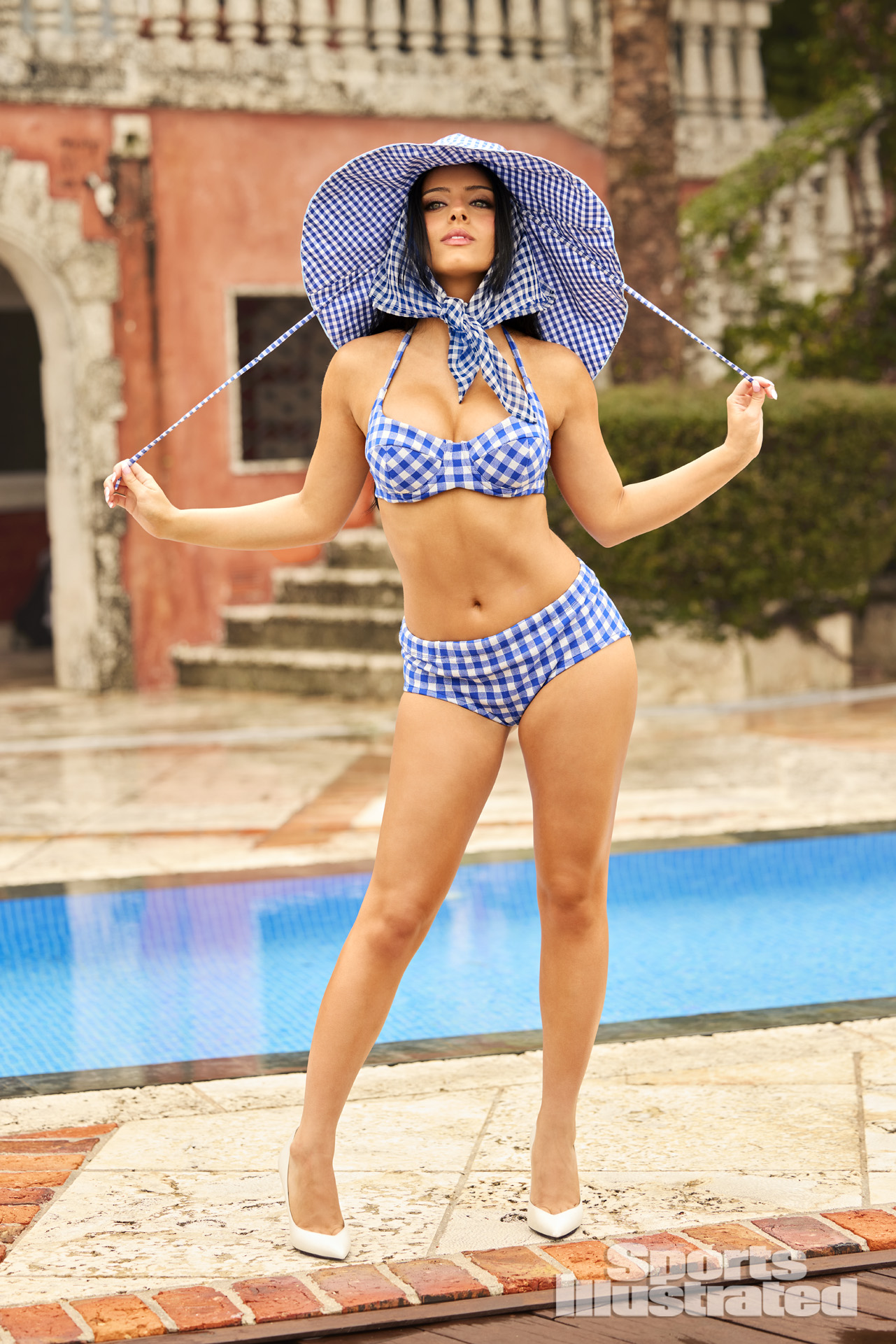

Swimsuit and hat are Vintage | Heels by Saint Laurent
Swimsuit and hat are Vintage | Heels by Saint Laurent
"Now I just �say whatever �the f--- I want."
Murph has been following her own arrow ever since she began singing. She posted her first cover to YouTube at age 11, of Sia’s “Titanium” (and it’s still up today). By high school, she began posting snippets of songs to TikTok as well, gaining attention for singing pop and rap songs alike in her warbly, entrancing voice. But in the small town of Athens, Ala., where Murph was living, people bristled at the curse words and mature content in some of the songs she sang. “I felt like I was being held in a cage of, like, what you can and can't say, being a woman,” Murph says.
�Their criticism was disheartening, but rather than letting it affect her art, Murph only used it as fuel. “It made me want to do the exact exact opposite,” she says. “Now I just say whatever the f--- I want.” And it was working — Murph remembers one encouraging moment when she left cheer practice in Athens and saw that one of her posts had gone viral. “I was like, O.K., this is my moment and I just have to put my head down and keep going,” she says. She thankfully did have the support of her mother, a former singer herself who’s “always been kind of a wild spirit,” says her daughter. Eventually, she decided to move their family to the larger and less judgmental town of Huntsville, where Murph continued posting her music.

Swimsuit is Vintage. Sunglasses are Chanel.

The move paid off when Murph’s videos caught the attention of Columbia Records, who signed her in 2021. Still in high school, Murph began recording her first singles — including “When I’m Not Around,” inspired by her experience in Athens. By the end of the year, her song “Always Been You” even charted on the Hot 100. Instead of rushing into a debut album, though, Murph continued releasing songs, and eventually collected them on her 2023 mixtape Drowning. “As much as I would have wanted to release an album when I was 17, 18, that probably would not have been a good idea,” Murph says. “I look at some of the things I'm handling now, and how busy I am, and just how much everything is, and I couldn't have handled that at 17, 18. It’s all happened in the right time.”
�A few weeks shy of her 19th birthday, in 2024, Murph was finally ready to release her proper debut album. And she had something to say: Spurred by a recent incident in her life, she’d been writing a lot of rage-filled songs. “It had brought up a lot of unresolved feelings from my past, and all my anger, I think, just came out,” she says. From the album’s title, That Ain’t No Man, That’s the Devil, she made it clear she wasn’t messing around.
��
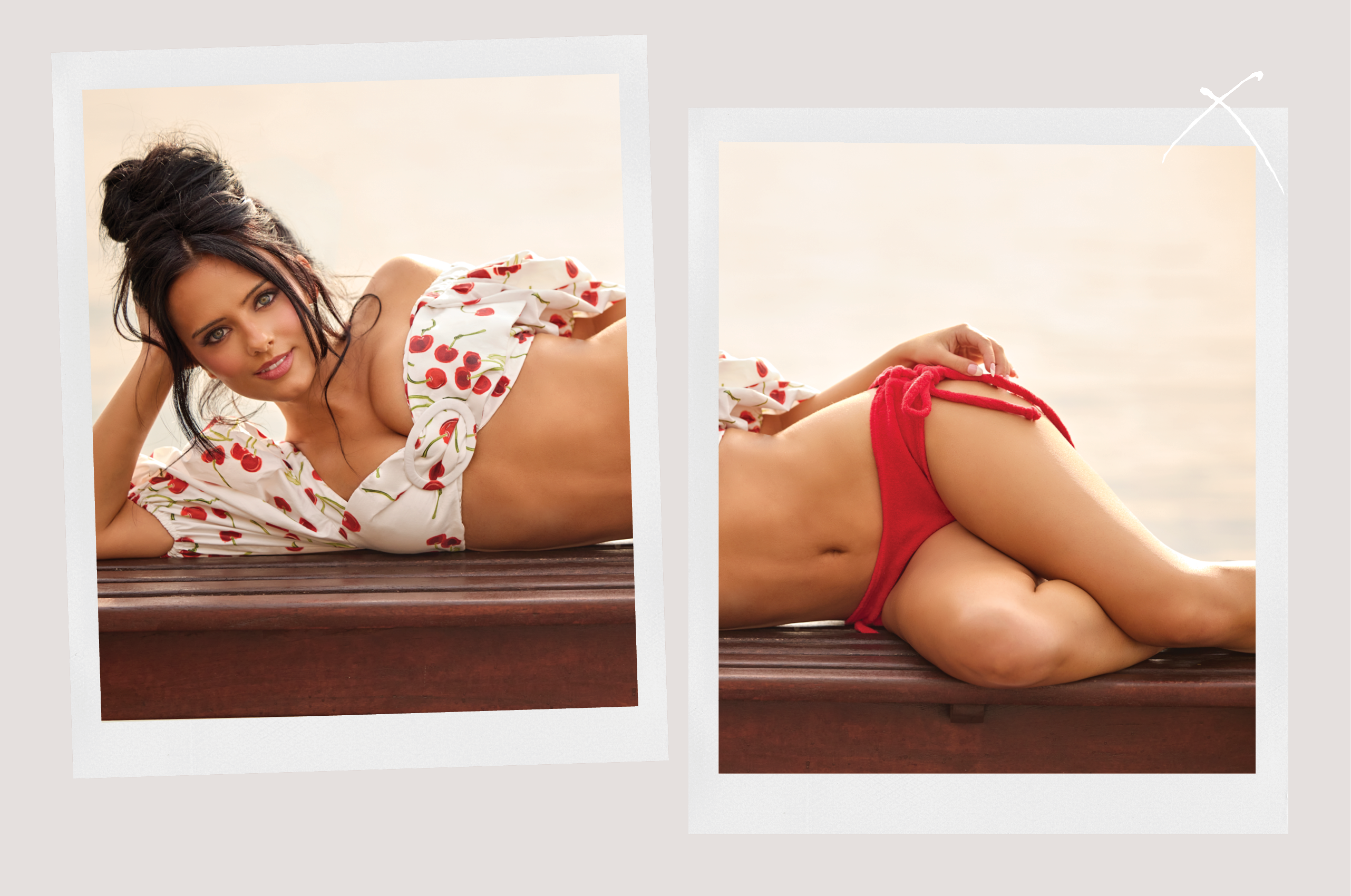
"I run a company, almost.��
And it's like, F---, �I don't even �have a blazer�or anything."
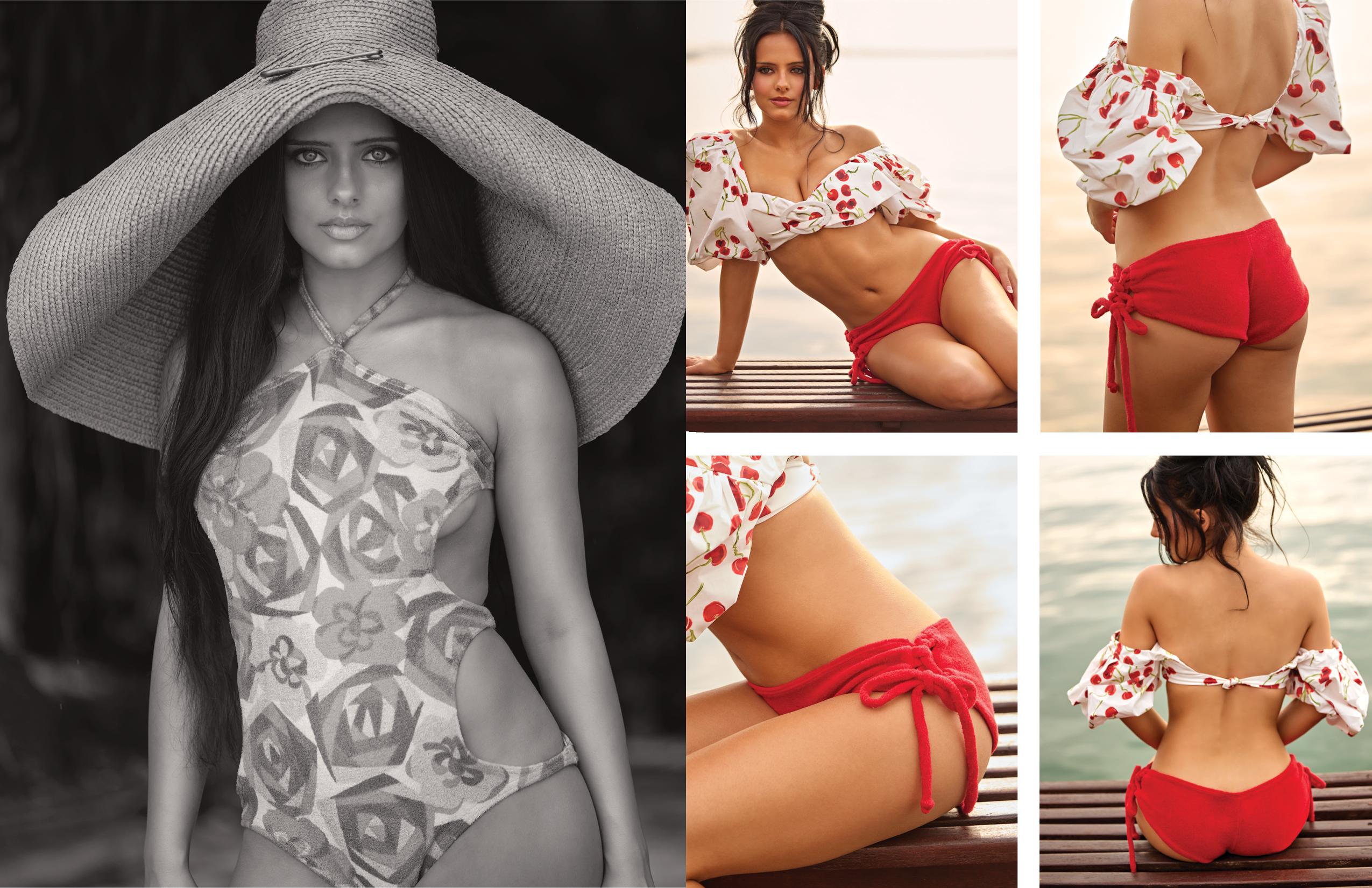
Not all of the songs Murph was writing for That’s the Devil came out angry, though. So she saved the rest for a follow-up album, which became Sex Hysteria. These songs show a wider emotional range, from the playful excitement of “Touch Me Like a Gangster” to the raw disappointment of “The Man That Came Back.” Murph was inspired by the historical diagnosis of hysteria, which was often used to send women who were seen as too emotional to asylums. “I experience a lot of really high highs and really low lows,” Murph says. “Every emotion I experience is very intense. And I think this album speaks to that.”
That means Sex Hysteria gives a much more complete picture of Murph than That’s the Devil did. She’s more vulnerable on some of the songs, like “Gucci Mane.” Just as importantly, though, she lets loose more on songs like “1965” — where�� she admits she’d “give up a few rights” for a more old-fashioned kind of love.
Many of the songs were just as fun to make as they are to listen to. “‘Blue Strips’ was just genuinely me just f---ing off,” Murph says of her biggest hit yet. A rowdy trap-pop song about hitting the strip club to get over an ex, “Blue Strips” went viral on TikTok earlier this year and peaked at No. 15 on the Hot 100. Murph knew it was special from the moment she recorded it. “Some songs just have glitter in them,” she says. “Any time I'd play it, it would make me smile.”
Then there’s the other side of Sex Hysteria. Murph is surprisingly open about her sex life at points on the album, like when she singsongily teases, “I like whips and chains / I like being tied to things, babe” on “Touch Me Like a Gangster.” It was another new side of herself to show, but after enduring the hate she did earlier in Athens, she wasn’t scared. “I'm just always writing to what's going on in my life, and that previously hasn't been a super big part in my life,” she says, through a few giggles. “Of course, I'm a little nervous about my mom hearing this stuff, because that's awkward, but other than that, f--- it. As long as I'm being honest, you know?”
Writing about sex in those songs made Murph think more deeply about her upbringing, especially her absent father. “What you see as a child is like your blueprint for love,” she says. “It sets you up to look for things that aren't good for you, I think, if you don't have a good perception of that from a young age.” From the beginning of the album, on “Gucci Mane,” Murph admits, “I know I love s---ty men.” Later, on the title track, Murph sings about a love that’s like “a slow carcinogen,” yet she still returns.
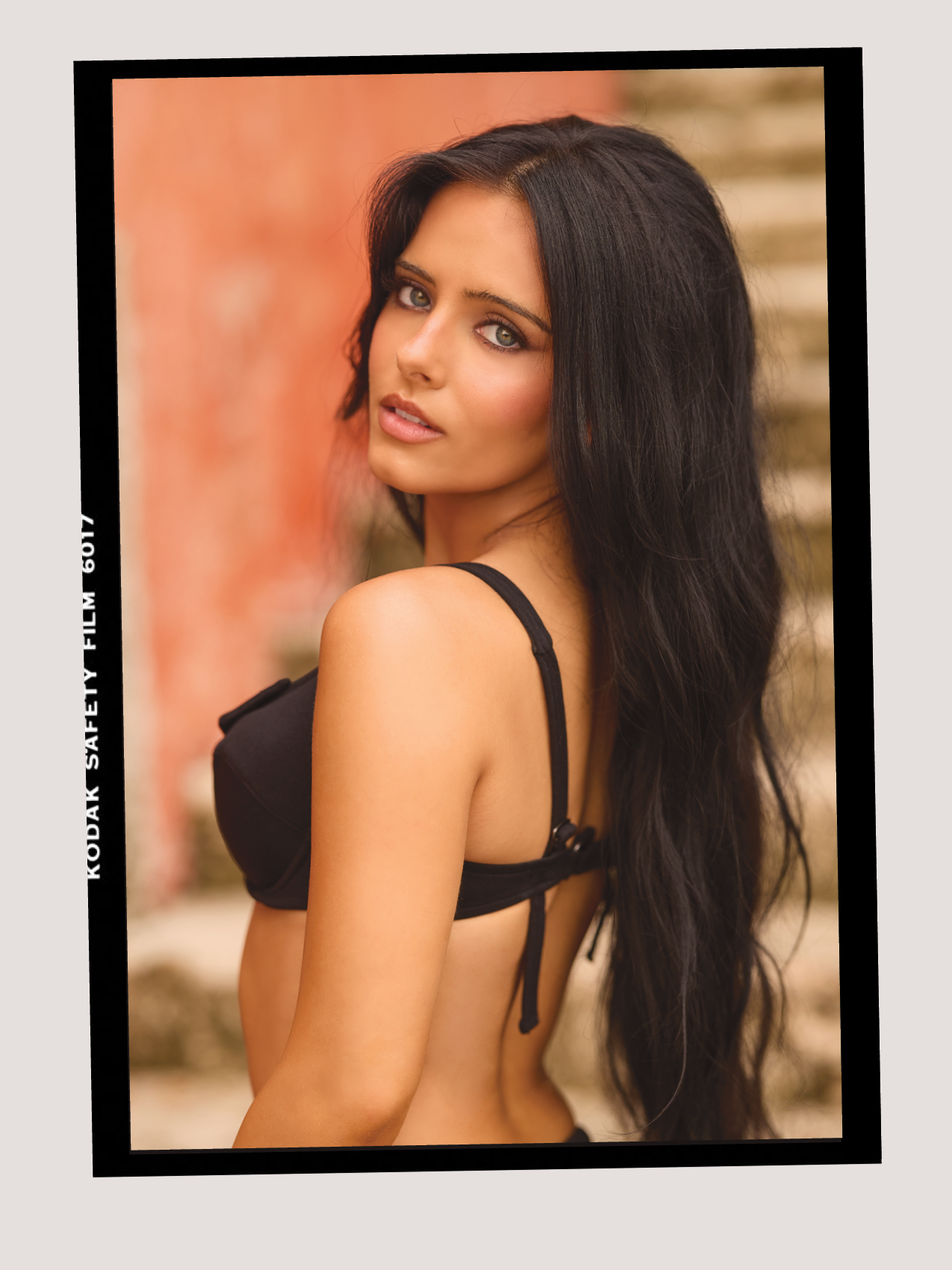
Murph confronts her father and the damage he did to her family directly on “The Man That Came Back,” the most cutting track on the album. In the song, Murph admits she couldn’t forgive him, even when he returned to the family insisting that he’d changed. She actually wrote the song years ago, when she was only 17, but never felt ready to release it. Even now, she still skips it when listening to her album. “That one’s brutal,” she says. “I've definitely debated taking it off a couple times.”
Ultimately, though, Sex Hysteria is an album about empowerment. On the final tracks, Murph begins taking her power back, culminating in the high-energy “Ur Bill Is Big As F---.” It’s a message directed to all the men who’ve racked up debts against Murph. “You've been through all these things, you're hurting and you're dealing with this and this and this, but at the end of the day, f--- all that,” she says. “It feels like you're pushing out your chair and you're standing up.”�
Murph has earned every bit of that confidence — and it’s only continuing to grow. Earlier in her career, the number of business decisions she had to make stressed her out, but they’ve become easier to handle with experience. “I run a company, almost,” she says. “And it's like, F---, I don't even have a blazer or anything.”�
She’s receiving signs of encouragement along the way. On “Gucci Mane,” Murph sang that she “sampled ‘Lemonade’ to make Gucci Mane proud.” Shortly after releasing the song, she learned that she did. Mane, who is also from Alabama, reached out to her, and the two eventually recorded the playful flex track “Donuts” together.�
But whenever interviewers asked Murph who her dream collaborator would be, she always said Lil Baby. The Atlanta rapper had been her favorite musician for years. “I remember being, like, 16, just really f---ing going through it, and dealing with things I'd never dealt with before,” Murph says. “And any time I was really not doing well, I'd put on Lil Baby's music and it inspired me to get up and go get my s--- done.”
�Murph didn’t just get to work with Lil Baby on her new song “Best Behavior” — she met him in person when they shot a to-be-released music video for the track in Atlanta. It was a surreal full-circle moment: Just a few years ago, one of her early viral TikToks had been a cover of Lil Baby’s song “U Played” with Moneybagg Yo. Now, here was her hero, rapping on one of her songs and starring in her music video. “It was a magical experience,” Murph says. “It was definitely a moment where I was like, Wow, I've really come so far.”

Top by Adriana Degreas | Swimsuit by Juicy Couture
Top by Adriana Degreas | Swimsuit by Juicy Couture | Heels by Jeffrey Campbell
�
Swimsuit is vintage.

Photographer DEREK KETTELA�Hair NATALIA BRATIN AT THE PEECHY GROUP�Makeup BABI MOURA AT THE PEECHY GROUP
Stylist AMANDA MERTEN�Words JUSTIN CURTO�Production CINDI BLAIR PRODUCTIONS
Art Direction PATRICK JAMES REILLY
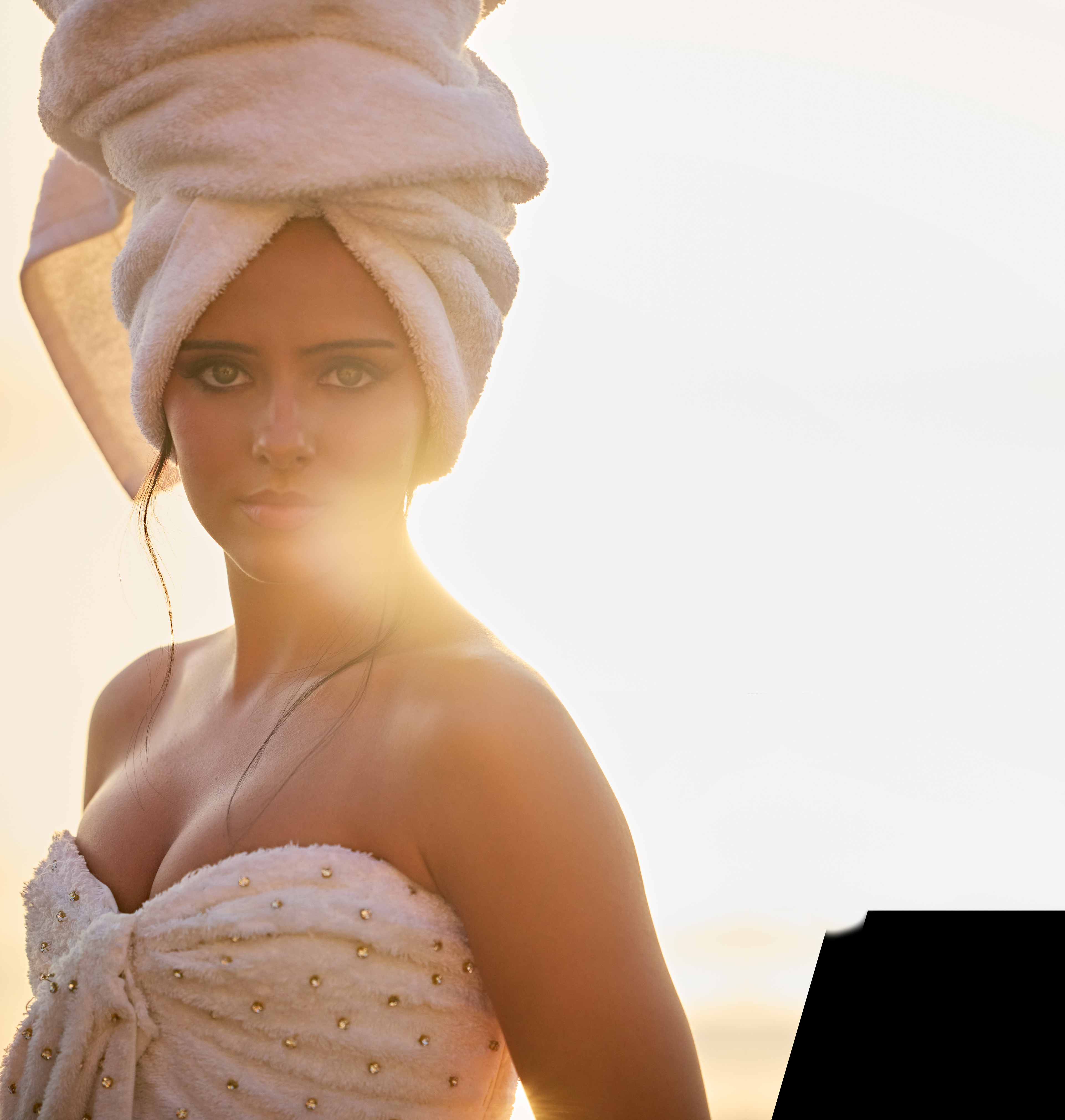

Swimsuit and hat are vintage | Hat by Jacquemus
�